Located in the dry zone of Sri Lanka’s North Central Province, Anuradhapura is one of the most historically and spiritually significant destinations in South Asia. As the island’s first capital, it served as the center of political and religious life for over a thousand years—between the 4th century BCE and the 11th century CE. Today, Anuradhapura stands as a UNESCO World Heritage Site, celebrated for its massive stupas, ancient irrigation systems, and deep-rooted Buddhist heritage.
A Glorious Past Etched in Stone
Anuradhapura was established around a sacred cutting of the Bodhi Tree, brought from India by Princess Sangamitta, the daughter of Emperor Ashoka. This sacred tree, known as the Sri Maha Bodhi, is said to have grown from the very tree under which the Buddha attained enlightenment. Planted more than 2,300 years ago, it is the oldest historically recorded living tree in the world.
The ancient city rapidly expanded under various Sinhalese kings, who commissioned grand temples, palaces, tanks (reservoirs), and monasteries. At its peak, Anuradhapura rivaled the greatest ancient cities of Asia, both in scale and spiritual influence.
Must-Visit Sites in Anuradhapura
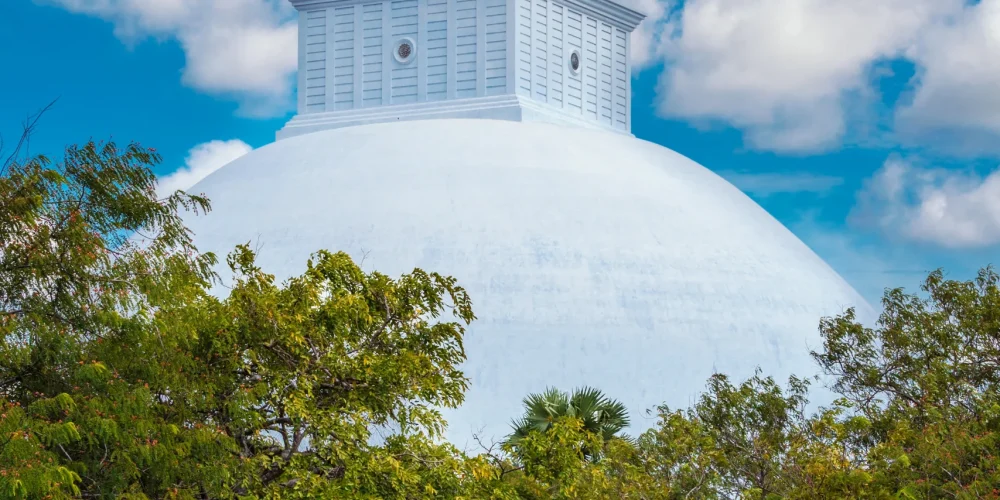
One of the most iconic landmarks is the Ruwanwelisaya Stupa, a towering white dome built by King Dutugemunu in the 2nd century BCE. It is revered as a masterpiece of Sinhalese engineering and stands as a symbol of devotion and national pride.
Nearby is the Jetavanaramaya Stupa, once the tallest brick structure in the world, reaching 122 meters (400 feet). This massive dagoba was part of the Abhayagiri Monastery, a sprawling complex that attracted Buddhist scholars and monks from across Asia for centuries.
Another architectural gem is the Thuparamaya Stupa, believed to be the first stupa built in Sri Lanka after the introduction of Buddhism. The Mirisawetiya, Lankarama, and Abhayagiri Dagoba also showcase the grandeur of ancient Buddhist architecture and spiritual devotion.
Intricate Designs and Engineering Marvels
Beyond the stupas, Anuradhapura reveals a deep sense of planning and sophistication. The Twin Ponds (Kuttam Pokuna) are a fine example of ancient Sri Lankan hydraulic engineering and are believed to have been used by monks for bathing. These two beautifully symmetrical pools feature stone steps and filtration systems that functioned with remarkable precision.
Another striking example of detail and design is the moonstone (Sandakada Pahana)—a semi-circular carved stone placed at the entrance of Buddhist temples. These intricately carved stones represent the cycle of birth and rebirth in Buddhist philosophy and are found at multiple temple sites throughout Anuradhapura.
The Sacred Sri Maha Bodhi
No visit is complete without a pilgrimage to the Sri Maha Bodhi, the sacred fig tree brought from Bodh Gaya, India. Surrounded by walls and worshipped with daily offerings of flowers, incense, and prayers, the tree attracts devotees and monks from across the country. Visiting during a full moon (Poya Day) offers a truly spiritual and cultural immersion.
Getting Around Anuradhapura
The ancient ruins are spread across a vast area, covering more than 40 square kilometers. While you can explore on foot, it’s much more convenient to rent a bicycle or hire a tuk-tuk with a local guide. Most guides are well-versed in the city’s religious and architectural history and can add depth to your experience.
Entry to the sacred city requires a foreign visitor ticket, which includes access to most of the major sites. Tickets can be purchased at the official archaeological counter or online through Sri Lanka’s cultural sites portal.
Practical Travel Tips
- Dress modestly: This is an active religious site, so shoulders and knees should be covered. Shoes must be removed before entering any temple or stupa.
- Visit early morning or late afternoon to avoid the intense mid-day heat, especially in the dry season.
- Bring water, sunscreen, and a hat, as shade is limited in most parts of the complex.
- Hire a local guide to gain context and avoid missing lesser-known gems.
Where to Stay
Anuradhapura offers a variety of accommodations from simple guesthouses to mid-range and boutique hotels. Popular areas to stay include New Town or Mihintale Road, which offer easy access to both the archaeological park and modern amenities.
Some top picks:
- Budget: Nilketha Villa Eco Hotel
- Mid-range: The Lakeside Hotel at Nuwarawewa
- Boutique: Heritage Hotel Anuradhapura
A Living Spiritual Legacy
Anuradhapura is more than just a historic site—it’s a living spiritual city. Monks still meditate under the ancient trees, devotees light oil lamps at sunset, and the scent of jasmine and incense fills the air. The silence of the stupas, the devotion of the pilgrims, and the scale of the ruins combine to create an unforgettable atmosphere.
Whether you’re a Buddhist pilgrim, a historian, or a curious traveler, Anuradhapura offers a rare chance to step back into a world shaped by faith, intellect, and timeless architectural brilliance.